February 19, 2026


If you’re running a business in Canada, you are already living and breathing the challenges on a daily basis. Rising wages, a tight labour market, and economic uncertainty are squeezing margins from every direction.
Here is the reality most founders will not say out loud: you are probably overpaying for roles that could be done remotely, by someone equally (or more) qualified, at a fraction of the cost.
That is not a knock on local talent. It is economics. It is operational leverage. And smart Canadian companies in tech, professional services, agencies, and e-commerce are already acting on it by hiring in the Philippines.
Here is why the Philippines specifically:
For Canadian founders, this is not just about cutting costs. It is about buying back your time, reinvesting in growth, and building a team that actually sticks around.
Not every company needs off shore talent. But the ones that do tend to share a few traits:
Small and medium businesses with 5–100 employees where founders, leaders and skilled individual contributors are stuck doing low-leverage, $18/hour work. High-growth companies that need talent but do not have the capital to hire five more Canadians at full market rate.
Remote-friendly cultures already running on Google Workspace, Slack, Zoom, or Asana. And industries like SaaS, marketing agencies, professional services, e-commerce, CPG, education, and real estate.
If your team is constantly juggling admin, support, marketing execution, and internal operations with no budget to add more Canadian headcount, this was built for you.
A good rule of thumb: if a role is remote, process-driven, and does not require in-person presence or heavy regulation, it can probably be done extremely well from the Philippines.
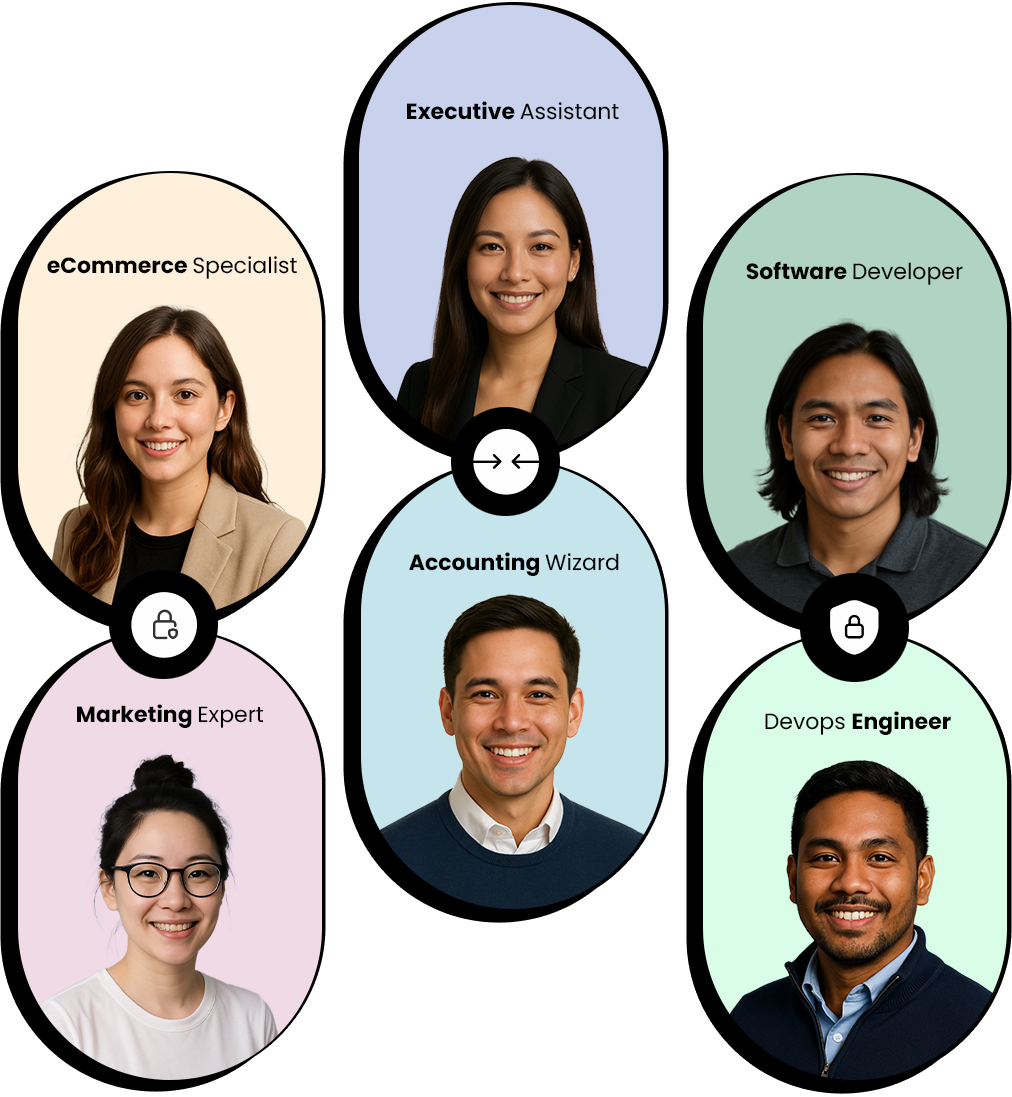
Common roles Canadian companies offshore first:
Scaledforce focuses on placing the top 1% of remote talent for these roles, then backs them with managed services so they ramp quickly and perform over the long term.

Start with three questions: What does success look like in 90 days? What tasks consume most of your or your team’s time today? Which tools and systems will this person use daily?
Translate that into a one-page role scorecard with responsibilities, KPIs, required skills, and nice-to-haves. Do not overcomplicate this. A clear brief is worth more than a five-page job description.
You have three options. DIY via job boards gives maximum control but you own everything: sourcing, vetting, HR, payroll, training, management. Project based freelancers work for one-off tasks but fall apart when you need consistency. A managed off shore staffing partner handles recruiting, vetting, matching, HR, and ongoing support while you focus on outcomes.
For most Canadian SMBs without a dedicated offshore HR function, the managed partner route creates the best balance of speed, quality, and risk management.
Learn how Scaledforce’s managed model works
The most reliable approach starts with a broad pool of candidates rather than cherry-picking one. You want to test written communication, attention to detail, reliability, and willingness to learn. Prioritize full-time candidates looking for stable employment with strong internet and a proper work setup.
At Scaledforce, this all happens behind the scenes. You see shortlisted, pre-vetted finalists aligned with your requirements, typically within 2–3 weeks.
Here is something most people get wrong: forcing a live video interview can actually screen out excellent Filipino talent. Many are highly capable but may be shy in a live setting, even though their written English and work output are outstanding.
Better options include asynchronous video or audio answers to a few key questions, a short paid test project representative of real work, or a structured email Q&A. You are looking for clarity, honesty, problem solving and not perfect small talk.
Most Canadian businesses land on one of two models. Full overlap (9am to 5pm ET or PT) works best for real-time collaboration and customer-facing roles. Partial overlap (2 to 3 hours with Canada plus independent work) is ideal for deep work in marketing, operations, and back office.
Pair this with a simple daily check-in (Slack update or Loom video), weekly 1:1s for feedback, and clear expectations on response times. Filipino talent tends to be conscientious and eager to please. The biggest risk is silence when they are stuck. Proactively inviting questions and making it safe to ask for help dramatically improves long-term success.
Most Canadian SMBs either engage Filipino workers as independent contractors paid via international platforms, or work through a managed staffing provider that handles local HR, payroll, and compliance.
At a minimum, ensure you have a clear contract covering scope, confidentiality, IP ownership, and termination. Set up reasonable security and access controls for tools and data. Agree on working hours, holidays, and notice periods.
Always consult your Canadian accountant or lawyer for tax and legal specifics. Thousands of Canadian companies are already using these models successfully.

Scaledforce was built specifically for Canadian businesses that want to scale profitably with elite remote talent from the Philippines.
The model includes: top 1% talent matched to your specific role. Transparent pricing with no hidden fees or long-term contracts. 2–3 week hiring timelines from intake to start date. Ongoing managed services with performance check-ins, training, and support. Retention strategies including competitive compensation, raises, bonuses, and a focus on long-term relationships. And performance visibility with optional productivity insights and weekly reporting so you know your team is delivering.
For Canadian founders, that means less time firefighting hiring issues and more time growing the business.
Q: Is it really possible to get “top 1%” talent offshore?
A: Yes. When you recruit deliberately, vet rigorously, and offer stable, full-time roles with fair pay and growth, you attract the top tier of the market. That is the entire foundation of how Scaledforce operates.
Q: How long does it take to see ROI?
A: Most Canadian businesses start seeing meaningful ROI within 60–90 days as offshore team members take over entire workflows in admin, marketing, customer support, or operations.
Q: What if it does not work out?
A: With a managed partner like Scaledforce, you are not locked into a permanent hire. We offer flexible month-to-month agreements and can rematch you with another candidate if expectations are not met. This significantly reduces risks versus hiring directly.
Access world-class remote workers withoutmaxing out your budget.